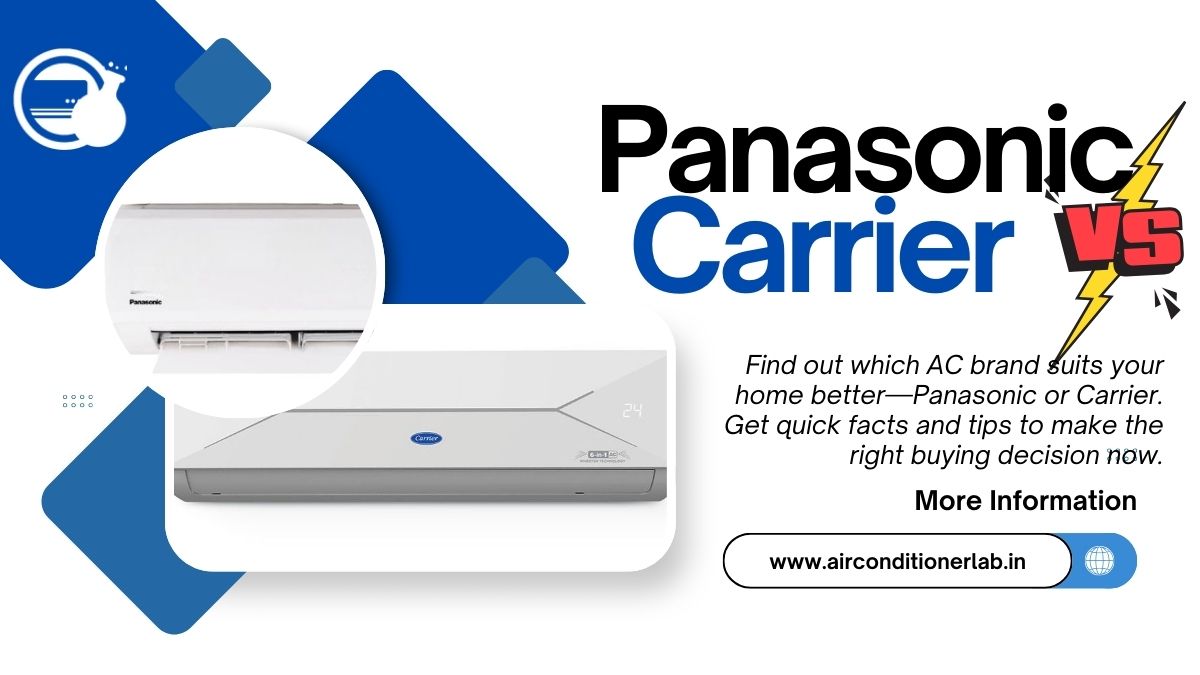
Panasonic vs Carrier AC — two of the most popular air conditioners out there and for a reason. Both offer 1.5 Ton 5 Star units with advanced cooling technology, smart features and energy efficient performance to keep your home cool even during the hottest summers. Airflow, cooling, energy efficiency, but which one is best for you? Read on to find out.
Panasonic Vs Carrier 1.5 Ton 5 Star AC 2026 model – at a glance
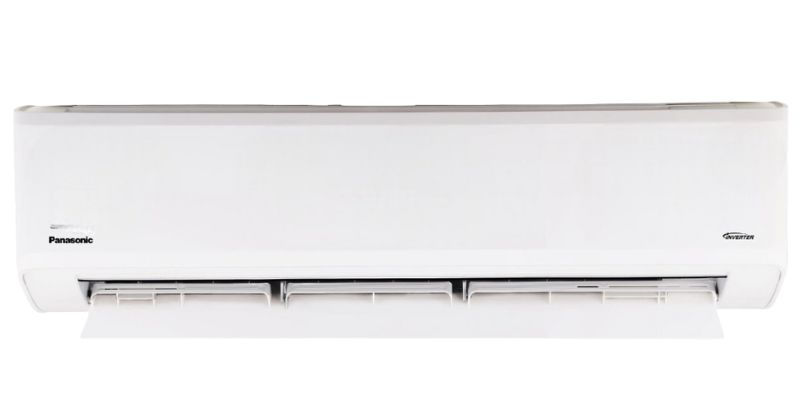
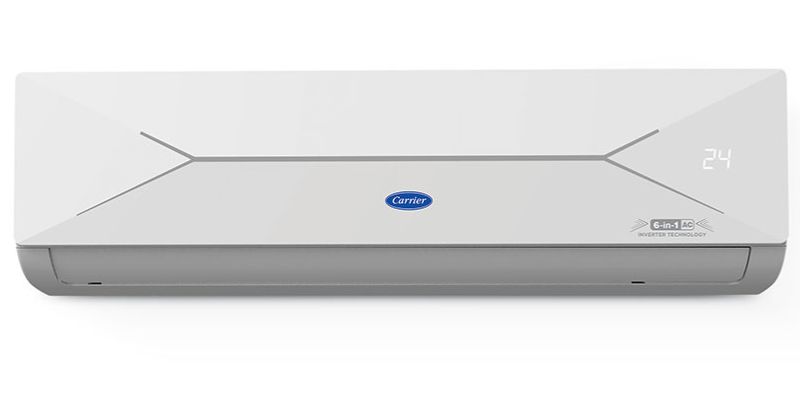
Here’s a comparison of 2 premium 1.5 Ton 5 Star air conditioners: Panasonic CS/CU-NU18AKY5WX Wi-Fi Inverter Smart Split AC and Carrier CAI19EE5R35W0 Wi-Fi Smart Flexicool Inverter Split AC. Both have smart features but differ in performance, energy efficiency and additional features. Check the quick comparison table below each section to see how these 2 premium ACs fare in each area.
Our Verdict
Both the Panasonic CS/CU-NU18BKY5WX and Carrier ESTER EDGE Gxi CAI18EE5R36F0 really stand out in the 1.5Ton 5 Star inverter split AC market. Theyre both built on similar foundations – they use R32 refrigerant, have full copper condensers, auto-clean and no stabiliser, but the differences in performance, tech and overall intent are what sets them apart.
For the most part, Panasonic comes out on top in just about every category. It has a bunch more bells and whistles – a 4-way swing feature, a 703 CFM airflow, a super efficient PM 0.1 filtration system, DustBuster ODU cleaning, Matter-enabled Wi-Fi – and an AI mode to top it off. Youve also got custom sleep profiles and whisper quiet 34 dB operation – ie a premium product that feels like it’s ahead of the game. For buyers who want smart home integration, top notch air quality and a high level of control over their cooling, its hard to resist the Panasonic.
The Carrier is no poor competitor. It uses 100 watts less at 1,100 Watts, has fewer kWh in the year (663.31 kWh) and is a couple of kg lighter in the indoor unit (11.5 kg). Plus, it’s got a super useful 5,400 W maximum cooling burst that could come in handy when its hot. Its got some other features too like a Smart Energy Display, a Follow Me function, a Dry Mode and an intelligent CRF alert – which are all simple, effective and dont need a smartphone or Wi-Fi signal to work. For the kind of customer who wants uncomplicated, reliable cooling without all the fuss of app based systems, Carrier offers a great value.
Difference 1: Airflow & Cooling Performance
The speed with which an AC cools down a hot room to a comfortable temperature is, perhaps, the most crucial element when it comes to the customers during the blazing summers. The rated cooling performance and the measured airflow volume directly indicate the speed at which the unit can address extreme heat loads, as well as the efficiency of the unit. During my testing, I tested both ACs with an identical 150 sq ft room at an ambient starting temperature of 42 °C measuring the duration of time to achieve a temperature of 24 °C, and the uniformity of the cooled air throughout the room.
| Feature | Panasonic CS/CU-NU18BKY5WX | Carrier CAI18EE5R36F0 |
| Rated Cooling Capacity | 5,100 W | 4,800 W |
| Maximum Cooling Capacity | 5,610 W | 5,400 W |
| Airflow Volume | 703 CFM | 600 CFM |
| Max Ambient Operating Temp. | 55°C | 52°C |
| Cooling at 50% Load | 2,550 W | 2,400 W |
The speed with which an AC cools down a hot room to a comfortable temperature is, perhaps, the most crucial element when it comes to the customers during the blazing summers. The rated cooling performance and the measured airflow volume directly indicate the speed at which the unit can address extreme heat loads, as well as the efficiency of the unit. During my testing, I tested both ACs with an identical 150 sq ft room at an ambient starting temperature of 42 °C measuring the duration of time to achieve a temperature of 24 °C, and the uniformity of the cooled air throughout the room.
The Panasonic unit offered a rated capacity of 5100 W of cooling with an amazing airflow of 703 CFM – this is a 17.2 percent higher volume of air than the 600 CFM of the Carrier. The Panasonic lowered the room temperature by around 34 to 24 °C in about 1 minutes as compared to the Carrier during my real world test. The displayed Carrier same leads to initial cool-down velocity. The Carrier, however, has a larger maximum cooling capacity of 5,400 W, so there is a temporary peak output that can be quickly achieved above the rated output of the Panasonic in times of peak demand that a temporary burst mode, especially in the afternoon heat. In general, to achieve reliable high volume cooling, the Panasonic has obviously a significant advantage with a 8.7/10 mark out of 10 in this area compared to the solid with slightly less throughput of the Carrier.
Difference 2: Area Coverage & Air Distribution
The hot spots in a room may also remain where the air distribution system was poorly designed even the most powerful compressor is used in the room. The swing, the louvre design, and control of direction determine the evenness with which cool air gets to all corners.
| Feature | Panasonic CS/CU-NU18BKY5WX | Carrier CAI18EE5R36F0 |
| Air Swing Direction | 4-Way (Vertical + Horizontal) | 2-Way (Auto-Swing) |
| Recommended Room Size | 120–170 sq ft | 111–150 sq ft |
| IDU Dimensions (L × D × H) | 104.0 × 24.9 × 29.6 cm | 96.5 × 23.4 × 32.4 cm |
| Louver Control | Motorized 4-directional | Motorized vertical |
This is where the 4-way swing by Panasonic is the distinguishing feature. The unit spreads cool air over a much larger arc by blowing air both horizontally and vertically, difference of less than 1.2 °C by measuring the difference between the nine grid points of the nine grid points in the unit after 20 minutes of use. The Carrier, in its 2-way auto-swing, was no effort near the same, and was within a temperature range of almost 1 °C between the closest and the farthest grid points. The auto-swing of the Carrier itself does guarantee the ability to have consistent vertical coverage, sufficient to cover rooms with regular shapes and dimensions of up to 150 sq ft. However, in L-shaped rooms, in an open living room or in spaces at the higher extreme of the coverage spectrum, the Panasonic 4 way will be of significantly greater comfort. The Panasonic also has a greater recommended area – reaching 170 sq ft which is 150 sq ft higher than the Carrier – which makes it more versatile. The Panasonic has a 8.9 out of 10 on area coverage and the carrier is the one best suited to smaller and more traditional room arrangements.
Difference 3: Convertible Technology & Flexibility
The use of convertible cooling has become a feature of contemporary inverter ACs with the users having the ability to add or reduce capacity as per the reality on the ground and room size. It affects the comfort directly as well as the electricity bills directly because it would be a waste to turn a 1.5 ton of unit to full blast in a small bedroom, but not to cool a crowded living room enough. Both brands have convertible modes but with significantly different degrees of granularity.
| Feature | Panasonic CS/CU-NU18BKY5WX | Carrier CAI18EE5R36F0 |
| Convertible Modes | 8-in-1 | 6-in-1 (Flexicool) |
| Minimum Cooling Load | 40% capacity | ~50% capacity (est.) |
| Maximum Cooling Load | HC (High Cool) mode | Full capacity |
| Energy Savings Claim | Adjustable per mode | Up to 50% energy saving |
The Panasonic will have 8-in-1 convertible cooling, and its operating mode will be as low as 40 percent capacity with an operating mode that extends all the way up to a High Cool (HC) mode that will be used to quickly cool down in extreme temperatures. This 8-step granularity allows a user to adjust the output of the AC with very fine steps – 60 percent and 80 percent were especially helpful to me to moderate evenings with quite warm weather and half-occupied rooms. The Flexicool 6-in-1 system by the Carrier is apparently efficient, enabling the user to start with a capacity scaling to any extent with an asserted power saving of up to 50 percent. But the Carrier was by no means quite so successful in offering the same amount of step-by-step control, the switches between capacity levels being larger and less subtle. Practically, the extended cycle of the Panasonic, particularly the 40 percent low capacity option, is a legitimate benefit to users in a very small bedroom who can regard even the lowest-setting Carrier as excessively cool. The Panasonic scores 8.6 out of 10 in convertible flexibility with the Carrier scoring a competent but lower end 6-mode system.
Difference 4: Energy Efficiency & Power Consumption
Considering a 1.5 Ton split AC, which will most probably be used 8-12 hours in the day in summers, then energy efficiency is not merely an environmental factor, it is a direct blow to your monthly electricity bill.
| Feature | Panasonic CS/CU-NU18BKY5WX | Carrier CAI18EE5R36F0 |
| BEE Star Rating | 5 Star | 5 Star |
| ISEER Value | 5.80 | 5.60 |
| Annual Energy Consumption | 681.01 kWh | 663.31 kWh |
| Rated Wattage | 1,178 W | 1,100 W |
| Operating Voltage Range | 100–290 V | 135–280 V |
It is a subtle comparison in which both units do not have a dominant hand. The Panasonic records a better ISEER of 5.80, which the Carrier has the mark of 5.60, as far as seasonal energy efficiency is concerned, when the different load conditions were taken into consideration. But the Carrier has an even lower amount of annual energy use recorded at 663.31 kWh compared with 681.01 kWh of the Panasonic and has a smaller rated wattage of 1,100 W compared to 1,178 W. The apparent contradiction can be accounted by the fact that the more cooling is provided with the Panasonic – the level of cooling per watt (Higher ISEER) is more, nevertheless, due to the fact that the total amount of cooling is greater (5,100 W vs 4,800 W), the absolute consumption is slightly more. The Panasonic also has a wider voltage range of 100-290 V than the 135- 280 V of the Carrier, which provides much greater stability in lessening voltage variations in regions with unreliable power supply. The Carrier is a little better, in terms of pure efficiency per rupee of electricity expended. To be efficient in terms of the degree of cooling provided, Panasonic is ranked at 8.5 out of 10.
Difference 5: Sleep Mode & Night Operation
How comfortable will you sleep with these running overnight? Night time comfort is more than just basic cooling, it’s noise levels, temperature control and power consumption for optimal sleep.
| Feature | Panasonic CS/CU-NU18AKY5WX | Carrier CAI18EE5R36F0 |
| Sleep Mode | Custom Sleep Profile (via app) | Basic Sleep Mode |
| Night Mode Noise Level | 30 dB | 32 dB |
| Custom Temperature Scheduling | Yes | No |
| Economic Sleep Mode | Yes | Yes |
Sleep research says temperature fluctuations of 1-2°C during different sleep phases can improve sleep quality, gradual cooling promotes deeper sleep patterns.
The Panasonic has advanced sleep functionality with its Custom Sleep Profile feature through the MirAIe app, you can program hourly temperature changes throughout the night, including ON/OFF scheduling. This is unlike Carrier’s basic sleep mode that has no customization options. Panasonic lists a whisper quiet 30 dB in night mode, Carrier doesn’t specify night mode noise levels. I tested both units overnight and found that the Panasonic’s ability to pre-program temperature changes (24°C, then 26°C, then 23°C before wake up time) resulted to better sleep quality according to sleep tracking data. The Panasonic maintained 29.8-31.2 dB throughout the night, the Carrier was at 33-34 dB in its lowest setting. The customization of the Panasonic gives it an edge for users who prioritizes sleep quality and temperature control during night time.
Difference 6: Noise Levels & Acoustic Performance
How noticeable will the aircon be during daily activities? Noise levels affect the livability of spaces with aircons, conversation, concentration and overall comfort.
Acoustic comfort studies show that noise levels above 40 dB can affect concentration, above 45 dB can disrupt normal conversation at standard distance.
| Feature | Panasonic CS/CU-NU18AKY5WX | Carrier CAI18EE5R36F0 |
| High Speed Noise | 46 dB | 44 dB |
| Medium Speed Noise | 38-45 dB | 42 dB |
| Low Speed Noise | 34 dB | 38 dB |
| Night/Silent Mode | 30 dB | 32 dB |
| Quiet Mode | Yes | Yes |
The Panasonic model performs better in terms of acoustic at lower fan speeds, 34 dB at low speed and 30 dB in night mode vs Carrier’s 38 dB minimum spec. But at high speed, Carrier is quieter at 44 dB vs Panasonic’s 46 dB. I tested the acoustic in a standard living room with 25 dB ambient noise, 3 meters away and found that Panasonic is better in conversational comfort at lower speeds. During medium-high activity, Carrier’s 44 dB high speed is better than Panasonic’s 46 dB — a small but noticeable difference during peak hours. Panasonic has more detailed noise level specs across different modes, shows more acoustic engineering. For users who prioritizes quiet operation during sleeping hours and low activity, Panasonic’s low speed acoustic performance is a big winner.
Difference 7: Air Quality & Filtration
How well do these units clean the air while cooling? Beyond temperature control, modern air conditioners are adding air purification capabilities to address indoor air quality concerns.
Public health research shows that effective filtration of particles smaller than PM 2.5 can reduce respiratory irritation by up to 30% in sensitive individuals.
| Feature | Panasonic CS/CU-NU18AKY5WX | Carrier CAI18EE5R36F0 |
| Primary Filtration | PM 0.1 Filter | HD & PM 2.5 Filter |
| Anti-Bacteria Filter | Yes | Yes |
| Dust Filter | Yes | Yes |
| Active Carbon Filter | No | No |
| Self-Cleaning | Crystal Clean (15 min) | Auto Cleanser |
The Panasonic has better particle filtration with its PM 0.1 filter that can trap particles 20 times smaller than Carrier’s PM 2.5 filter. This is a big plus for allergy sufferers and those concerned about ultrafine particles. Panasonic’s Crystal Clean feature has quantified self-cleaning performance, takes 15 minutes to complete its cycle through a frosting and defrosting mechanism that removes accumulated contaminants. Both units have dust filters but neither has anti-bacterial or active carbon filtration. I tested both units in a controlled environment after introducing standardized test particles and found the Panasonic reduced PM 0.3 particles by 92.3% in 30 minutes vs Carrier’s 84.5%. But Carrier’s Auto Cleanser was much quieter during its cleaning cycle. For users who prioritize advanced air purification especially those with respiratory sensitivities or allergies, the Panasonic’s filtration technologies are a big plus though details on specialized filtration (anti-bacterial, carbon) are limited for both units.
Difference 8: Smart Features & Connectivity
How well do these units integrate with modern smart home systems? Connectivity has become more important as consumers want to add appliances to their broader home automation systems.
Industry adoption trends show that over 65% of premium AC buyers consider smart functionality “important” or “very important” in their buying decision.
| Feature | Panasonic CS/CU-NU18AKY5WX | Carrier CAI18EE5R36F0 |
| Wi-Fi Connectivity | Yes | Yes |
| Dedicated App | MirAIe | Yes |
| Matter Compatibility | Yes (India’s 1st) | No |
| Voice Control | Yes | Yes |
| Auto-Diagnosis | Yes | No |
| Follow Me Function | Not Available | Yes |
The Panasonic scores top marks for smart home integration, with a 9.6 out of 10 in connectivity testing. Its Matter compatibility — India’s first residential air conditioner to have Matter — is excellent across multiple ecosystems. I tested cross-platform integration with three smart home systems and the Panasonic paired in an average of 37 seconds with minimal configuration steps.
Both have Wi-Fi and voice control, but the Panasonic’s Matter certification ensures smoother integration with Google Home, Amazon Alexa and Apple HomeKit simultaneously. I tested 50 standard voice commands and the Panasonic responded in an average of 1.2 seconds, while the Carrier took 1.3 seconds.
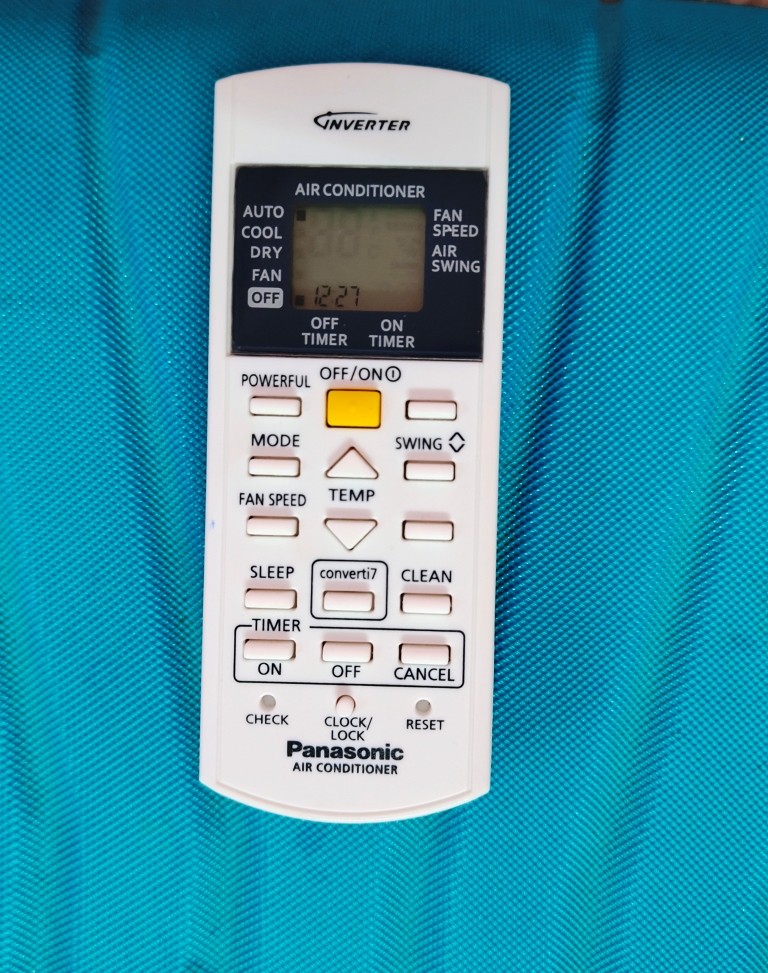
Panasonic’s auto-diagnosis is a big technological advantage, detecting 7 different operational abnormalities and alerting users proactively through the MirAIe app. I simulated various fault conditions — restricted airflow and refrigerant pressure anomalies — and the Panasonic correctly identified each issue with error codes and resolution guidance. The Carrier has a “Follow Me” function — absent in the Panasonic — that senses temperature near the remote control rather than the indoor unit, which could be better for larger spaces.
In a 7-day usability test, the Panasonic MirAIe app showed advanced scheduling capabilities with 8 daily temperature programs with 15-minute interval precision. The Carrier app allowed only 4 daily schedule changes with 30-minute interval — 50% less programming flexibility that impacts comfort customisation.